
An Interview with Sophie Handford, Labour Party Candidate for Kāpiti
Published 29 May 2026. Interview by Max Sakarai-Sarll, with Zinzan Goertzen.
The views expressed in this piece are not representative of SPPANZ or taken to be those of SPPANZ. They are the author's own. SPPANZ is nonpartisan.
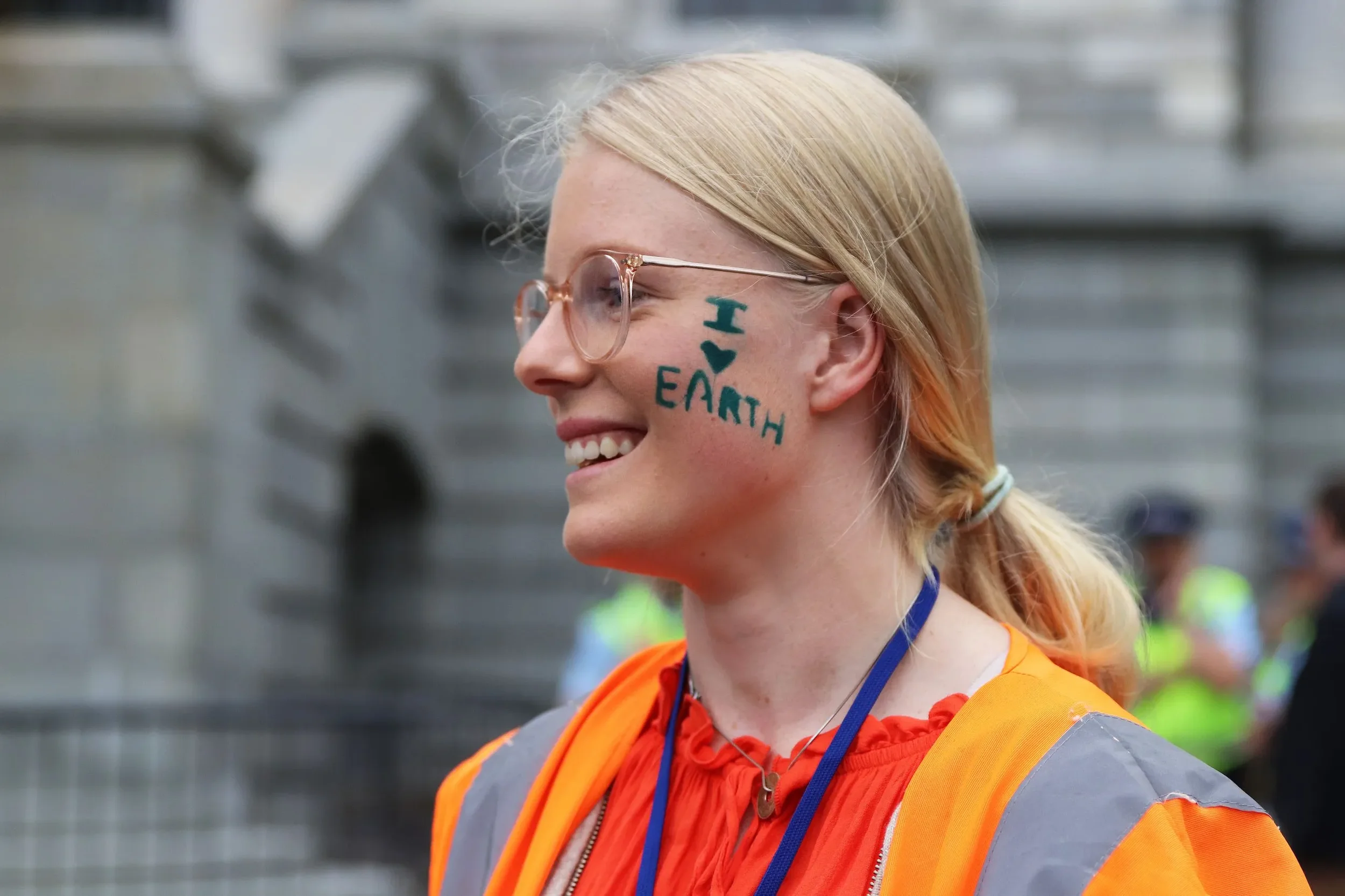
This interview was conducted on 20 April 2026 during a significant weather event affecting the Wellington region, with a state of emergency and red weather warning in place.
Sophie:
Kia ora. I'm Sophie, born and raised in Paekākāriki on the Kāpiti Coast. [I] am a climate activist, and also have been involved with local government through being on the Kāpiti Coast District Council for six years, and am now currently the Labour Party candidate for Kāpiti.
Essentially my why is that the environment can't speak up in the way that we can in decision making spaces, and it's so important that we carry the voice of both the environment on which we depend, but also the people that are often left out of those decision making spaces as well, including young people. So yeah, my why is just to use my voice and my energy to its full potential to make sure that decisions best reflect the planet on which we depend, but also young people and those who are often, whether it be structurally or systematically, left out of conversations.
Climate Awakening at 12
Max:
So, Sophie, you got involved in politics at age 12 over climate concerns in Kāpiti, right?
Sophie:
Correct, yeah.
Max:
So what was the moment or experience that made it feel real and urgent to you personally, rather than just something you read about?
Sophie:
Yeah, so when I was 12, and like I mentioned, born and raised in Paekākāriki, it's a small, seaside, geographically constrained community. We've got the ocean on the east side, and then on the west, we've got our mountains, so we very much have nowhere to really grow or to move. And I grew up 10 metres or so from the coastline, which was both an incredible experience, learning more about the ocean and getting to see it every day and the wonders that that does for your wellbeing.
But then, I guess, learning more about the impacts of climate change and coastal erosion on Paekākāriki was a really eye opening moment. When I was 12, my parents got a letter in the mail from the local council, setting out, yeah, I guess the tangible ways that coastal erosion and inundation could affect our community, our property value, the insurability of our home. And for me, that was a pretty real wake up call to the fact that climate change is, I guess, a future challenge that our communities will have to confront.
But as well as that, it was something that now between the age of 12, back over a decade ago, for me now and where I am today, I've actually noticed in my lifetime so far, the changes in our coastal environment. So it was a reminder for me that climate change is — and when we're seeing it with the weather right now — it's not a future challenge, it's a present one, and it is something we need to tackle head on now before it gets too hard, too expensive, and too challenging to navigate, because we'll be in the context of a climate that is even more unstable than it is now.
Max:
Yeah, I remember last year I went and did this beach clean, and I was so surprised with how much waste was just strewn about in places you wouldn't even think to look. So, yeah, just really important to address this before it gets out of hand.
Sophie:
Yeah. The other thing just to add to that super briefly, is I also remember thinking, okay, sure, Paekākāriki and the communities near us and in the wider Wellington region sure are already being impacted by climate change, but also those in the Pacific are very much having to grapple with the potential loss of their homelands, their entire culture, the things that make them who they are. And if their land goes, indigenous communities — very much their identity is intertwined with their whenua, with their land.
And so for me, the thought of being worried as a young person about the coastal environment, but for other communities globally, and especially in the Pacific, it's not just a concern around how that will affect your physical home, but it's a broader sense of the word home, because it's everything that makes you who you are, and your culture and your homeland. So that, for me, was another wake up call, I think.
Max: Did you see that video of the Tuvalu, I think foreign minister, addressing the COP Summit, literally half waist deep in water?
Sophie:
Yeah. And a picture paints 1,000 words. I think it's also — is it Tuvalu that's becoming the first country to be transformed into the metaverse? Which is quite, I think, should be concerning for all of us.
Max:
Yeah, hope they'll be all right someday.
Leading a National Movement at 18
Max:
So I wanted to ask, you went from leafletting for a local MP at 14 to coordinating [a] 170,000 person national movement at just 18 years old. So how did a teenager from Paekākāriki end up leading one of New Zealand's largest ever climate rallies?
Sophie:
Great question. To be honest, I think we just started really small. I just rallied some friends from my high school, Kāpiti College, and we began having conversations about how we were feeling in the context of climate change, and that youth voices were the ambition and the energy that we bring to this conversation, knowing how much is at stake because it's our future. That was completely missing in the climate conversation. We weren't seeing the kind of leadership at the scale and pace that we needed to see.
So I just started having conversations. I just put some social media accounts live, and tested the waters to see how many other young people would be keen to channel this sense of fear that they were feeling into something constructive and working together with other young people to raise our voices and articulate the kinds of things we want to see our leadership doing to tackle the climate crisis. And lo and behold, hundreds of people replied and were super keen to jump on board. And so it kind of just quite naturally gathered momentum from there.
But if I reflect back on how it initially happened, I think it was just almost getting outside of my comfort zone and the thought that if I don't do this now, and if I don't put out that first call, then this moment in time might go uncapitalised on. There was a global movement that had started to really garner momentum and support, and so it was the perfect moment for New Zealand to jump into that wave and be a part of building the global conversation around climate action. So yeah, we just jumped in headfirst, and a lot of other young people were keen to join.
Max:
So how did you respond to criticism, especially maybe from older people or parents who might think it's just an excuse for a day off?
Sophie:
Yeah, and we did have a few people making comments of that nature. I have to say, [the] majority of the commentary that I received was positive. In terms of how we responded to the negative ones, though, to be honest, I didn't give it that much energy. My mantra was, I've only got a limited amount of brain space and capacity and energy, and actually, it's best put towards the people who are going to help move this movement forward. And so I just didn't engage tons with the people that I didn't think we were able to convince or engage in a constructive dialogue with.
There were some people, sure, who were maybe a little bit sceptical about how useful, or how much change we would be able to achieve. And so working with them to show them that actually people-powered movements, if we look across history, have achieved some amazing things, because we are the ones who need to give our politicians the social licence to either do or not do things. And that if we all show up and say one thing collectively loud and clear, that can — and has been proven to — create some serious changes in New Zealand. Whether it's women's suffrage or the nuclear free movement, whether it be the te reo Māori petition as well, and the movement that surrounded that.
So we definitely tried to educate people where we felt we were able to in a kind way, but in terms of engaging in a combative conversation, I just didn't give it that much energy.
Max:
Change comes from those who are loudest in the room.
Running for Council at 18
Max:
So when you stood for council at 18, you worried your age would put voters off. So what actually pushed you to put your name forward anyway, despite the doubt?
Sophie:
Yeah, I definitely had doubt right the way through the campaign, and even once I was elected, I think that doubt kind of never went away. It was more so just finding other narratives that I could use to balance out the doubt and allow myself to feel comfortable and confident in these spaces where young people aren't often super well represented.
But I think what I used to push myself to just submit my nomination form and commit fully to being on the ballot paper was, I guess, the fact that even if I don't get elected, by running and by being able to be in the conversations with other candidates, you are inherently able to influence the direction of those conversations, in that the community is able to ask you questions. You can then respond. You can help to inject conversations around youth engagement, around iwi partnerships, around our climate into the conversation. And so I just made sure to use the campaign as an opportunity to do that without feeling super attached to the outcome of actually being elected at the other end of it.
Max:
Yeah, if you're going to put your name on, you might as well shoot your shot, right?
Sophie:
Totally. And I'm also a big believer in the fact that life's short. So if you have an inkling and you want to do something, and your intuition is saying, like, give this a crack. And again, it was the culmination of this mass movement you mentioned, 170,000 people out on the streets. Then the next month was the final cut off date to be able to be nominated for council. And so I was like, there's just something undeniable about this moment. And to not acknowledge that, I think would have been a wasted opportunity. So I'm really glad that I, in the end, just had a moment of courage and put myself forward.
Max:
Well, yeah, congrats on doing that. It's [a] very brave thing to do.
Sophie:
Thanks. And I think many other young people can and should do it. There's people like me who have now been in these spaces, who are more than happy and really keen, actually, to mentor other young people who are even remotely interested in the idea of running for council. So yeah, know that you'll be amongst a support network as well if it is something you're considering.
Bridging Activism and Institutional Politics
Max:
So you handed over School Strike for Climate to the next generation and moved into institutional politics, right?
Sophie:
Yeah.
Max:
So was there a moment where you consciously decided that working inside the system was where you could do the most good for young people?
Sophie:
This is a really interesting tension that I think I held while I was in council, where I was still very staunchly an activist, even though I was a local government elected member. Definitely acknowledging that, sure, I was now in the system, and to some that's like they then associate the system with me, and me with the system. But I still was very conscious of wanting to stay true to both my activism roots, but also make use of a lot of the tools that I developed in organising the climate strikes to then influence change inside the system.
So I think for me, it was more about being that bridge and not leaving either one of those systems and feeling like I need to trade off a part of myself to exist in either one of those spaces. But instead, just again, staying focused on that broader why, and then making the most of both the connection that I had, having passed on the School Strike for Climate movement to the next generation of leaders, and helping and supporting them to lead the movement in the way that they wanted to, but also connecting them in with the systems that I was starting to learn as well. So definitely still involved with both.
Max:
Yeah, activism gives you passion and institutions give you wisdom.
Sophie:
Thanks. Nice. Well put.
From Local Government to Parliament
Max:
So I wanted to ask you about your campaign. You spent six years changing things from inside local government. What is it that [a] district councillor simply cannot do that made you decide parliament was the next logical step?
Sophie:
Yeah, local government can do a whole lot. I definitely discovered that when I was on council, in that a lot of the day to day things that council does — and council's impact — is very real and present in people's lives, whether it's access to your drinking water or stormwater, and access to libraries and pools and those immediate facilities. And so I loved being involved in things that felt really tangible and relevant to my community.
I guess in the context of this current election, I'd seen over my last term on council just how destructive this current government had been for both the landscape of localism and giving local councils power and support to make decisions and to invest in things that will benefit their community. They were telling us to do this myriad of things, but not giving us any support to do it, constantly undermining the decisions that we'd made off the back of conversations with our community.
And also just feeling like there's only so much councils can do with limited resource. Councils only have — well, our council anyway — our only form of generating income is rates, and rates are a very blunt tool. And we know that our communities can't stomach increased rates rises every single year that are just absolutely exponential. But acknowledging that [at] the central government level, you have different and more targeted tools to ensure everyone has access to a warm, dry home, affordable healthcare and a well-paying job that will be able to ensure they can have a good life in New Zealand.
So I was just feeling so impassioned, I guess, that this election — if we think about how much has changed in a negative sense over the last two and a bit years with this current government in power — the thought of having us head even further down that track, and having that negative change in those culture wars and the trampling on the environment be further entrenched. I just feel like this election, if there was ever going to be a moment to nail your political colours to the mast, it has to be this election, because there's so much that hangs in the balance.
And so I just knew that I couldn't let this election slip by. And also that through being on local council, I developed a whole heap of local connections and relationships, and knowing that if I step into — or if I aim to step into — the parliamentary realm now, that I can then carry those people with me. Whereas if I decide to do something else for another five [to] 10 years and come back into the space, those people that I carry with me and that I've been connected with through my service on council, I'll likely no longer have those connections.
Max:
Yeah, you have to act while you've still got your connections, and making change is actually possible.
Hope and Systemic Change
Max:
So now, after your time inside local government, do you actually think the system can change fast enough, or do you think it needs something more fundamental?
Sophie:
I think we just have to persist, and we just have to be doing our little bit, and each of us chipping away. And we also can't afford to lose hope. That's something that, if I reflect on my years on council and now even in this campaign, if there's ever a moment where I find myself slipping into feeling despondent or pessimistic, like, it's just not helpful, it's just not contributing to us achieving the kind of systemic social change that we so desperately need.
So for me, I'm always trying to remain really connected to a sense of hope, that even if I'm doing a tiny little bit every single day and knowing that hopefully other people are also doing their tiny little bit every single day, that that is slowly turning the direction of the ship to, I guess, a system that better values people and their wellbeing and the planet and its wellbeing over profit ultimately. Like, we're really stuck in a kind of capitalist, colonial system that has been designed — and it's been designed to benefit certain people — and collectively, we can redesign that system.
But I truly think it just starts with all of us being more conscious about the system that we're operating in and choosing at specific points throughout our day and throughout our week and our month and our lives to make slightly different choices. And we can do that through either using our voice and standing for council or for parliament, or whether it's through signing a petition or through showing up to a protest or through voting with your dollar — thinking about being a conscious consumer. Yeah, I'm just a true believer in the fact that we can't lose hope in terms of that longer term goal, and we need to just be taking small steps towards it every single day.
Max:
Because in the US, you've got guys like [Mayor of New York City Zohran] Mamdani, you were saying, who literally said we're taxing the billionaires on the Tax Day, which is very good, but completely unprecedented for a country such as the United States. [It's] going to be really interesting to see if New Zealand will go the same way, or if more gradual change is actually possible.
Sophie:
Yeah, I think it's a balance, right? Like, that courage is really laudable, and it's needed. And I think we also just need to make sure that we're bringing people along with us, too, without then skimping on the leadership that's required. Like, we can't wait to bring everyone along with us if we know that something needs to be done because it's for the benefit of people. And I found that in council, sometimes people don't necessarily know what's best for them, and [in] investing large now in infrastructure, actually longer term will benefit people and will pay back. So it's just a tricky balance, I think.
Immediate Relief vs. Long-Term Vision
Max:
Yeah. So you talked about building an economy that works for everyone now [and] in the future. But how do you make that case to someone like myself or another student who needs relief like right now, not in a decade?
Sophie:
Well, I think in focusing on that economy that we're aiming for, we should be taking steps towards that every day. I mean, it comes back to what I was saying about that broader systemic change. And so, yeah, if we can communicate to people where we're heading and then show them through tangible actions in the here and now that our policies and our investment here and now is getting us towards that end goal, I think that's important.
I feel like sometimes, actually, in New Zealand, we've been relatively good at providing the immediate relief, but not necessarily communicating the broader vision and the place that we're aiming to head. So I think — I mean, obviously this government is not doing much of either of those things — but I think that we do need to obviously provide relief in the here and now, but that also needs to be contributing to a broader aim as well.
Pushing Labour Further on Climate
Max:
So you've basically built your reputation on speaking courageously even when it's uncomfortable. So is there anything about Labour's current platform that you'd push back on or want to see go further?
Sophie:
This is a really interesting question, and we actually were asked a similar question when all of us candidates went through a screening process by the party to get a sense of whether there would be things that we would speak vocally on that might not necessarily align with the current party platform.
And yeah, for me, it is just all about going further and faster on the climate crisis. But I've said that one of my reasons for standing with Labour is because I think Labour is so well placed to help deliver the change that we need in terms of reducing emissions, being a major party, having a real focus on the social wellbeing of people, and ensuring people can live lives of dignity. And connecting climate action to that is such an awesome opportunity to realise the co-benefits of climate action, because taking climate action can also make people's lives more affordable, and it can also just allow people to lead better lives working in sectors that you're actually going to be around in the future, and that are green and that are decarbonised. So yeah, I guess I believe really strongly in making that connection between a lot of Labour's social investment policy and connecting it to climate.
Priorities for Young People in Kāpiti
Max:
Very interesting. And if you win, what is the one thing you'd most want young people in Kāpiti to be able to point to at the end of your first term and say, "Hey, Sophie Handford made that happen"?
Sophie:
Young people in Kāpiti, or just people generally?
Max:
Young, young people in Kāpiti.
Sophie:
Yeah, there's a few things. I think investment in health, and including mental health, is a really big one. We've got an awesome youth one stop shop in Kāpiti, Kāpiti Youth Support, who are incredibly poorly funded, and that if they were to be able to receive more funds, they'd actually be able to, yes, see the amounts of people who need their service. And so the provision of funding to them and to health generally in Kāpiti is really important to me.
We're the only urban area with a population of more than 50,000 in New Zealand that doesn't have a 24/7 emergency facility in terms of accessing healthcare and getting seen to when you need it. So I would love for people to not have to drive into Wellington if they need care.
And another big one, I think, for young people in Kāpiti is — we've been promised, and they have actually now [been] procured, some new train carriages that will be able to extend all the way up to Ōtaki, so we'll have more frequent rail services connecting our whole district. Because currently Ōtaki, although it's part of our district, has not been well serviced at all by public transport. And so in terms of students being able to access the wānanga in Ōtaki, and then vice versa, students in Ōtaki coming down to the rest of the coast, [I'm] looking forward to seeing the better accessibility and movement be able to occur for young people across our district. And I'll just be really keen to keep tabs on that and make sure that's moving forward.
Max: Yeah, because I've been up that area like once or twice, and it's literally taken me like an hour or two from getting [from] like a part of [the] ruin [in] that area down to Wellington. So yeah, that's not a good look when someone needs urgent medical care. Yeah, really good that you're focusing on that.
Closing: The Biggest Issue for Young New Zealanders
Zinzan:
What's the biggest issue for young people in New Zealand, not just Kāpiti, and how would you address it?
Sophie:
Oh, this is a great question. The biggest issue, just one issue?
Zinzan:
Just one issue.
Sophie:
Does it have to be like a tangible issue?
Zinzan:
You can interpret it however you like.
Sophie:
Cool. I would say probably lack — just lack of opportunity. Whether it's opportunity to get work experience, opportunity to access the mental health support that we need, the lack of opportunity to have access to good quality housing as well that actually feeds into positive health outcomes.
I just feel like we've seen that young people have been leaving the country in droves, heading to Australia or to the UK in the hopes of a better life. But I think the more we can create opportunity for young people here at home and ensure that they feel like they can build a future here and get ahead in New Zealand, that that will then in turn ensure that we've got amazing young change makers who are leading us forward in terms of our climate solutions and in terms of all of the other really big issues that we're facing at the moment. So yeah, I think if we solve that lack of opportunity piece and better support our young people, then we'll see all of us continue to still be really engaged in the long term issues that impact our future.