
Interview: Francisco Hernandez, List MP and Dunedin Candidate for the Green Party
Published 3 November 2026. Interview by Molly Smith-Soppet, with Molly Lynch.
The views expressed in this piece are not representative of SPPANZ or taken to be those of SPPANZ. They are the author's own. SPPANZ is nonpartisan.
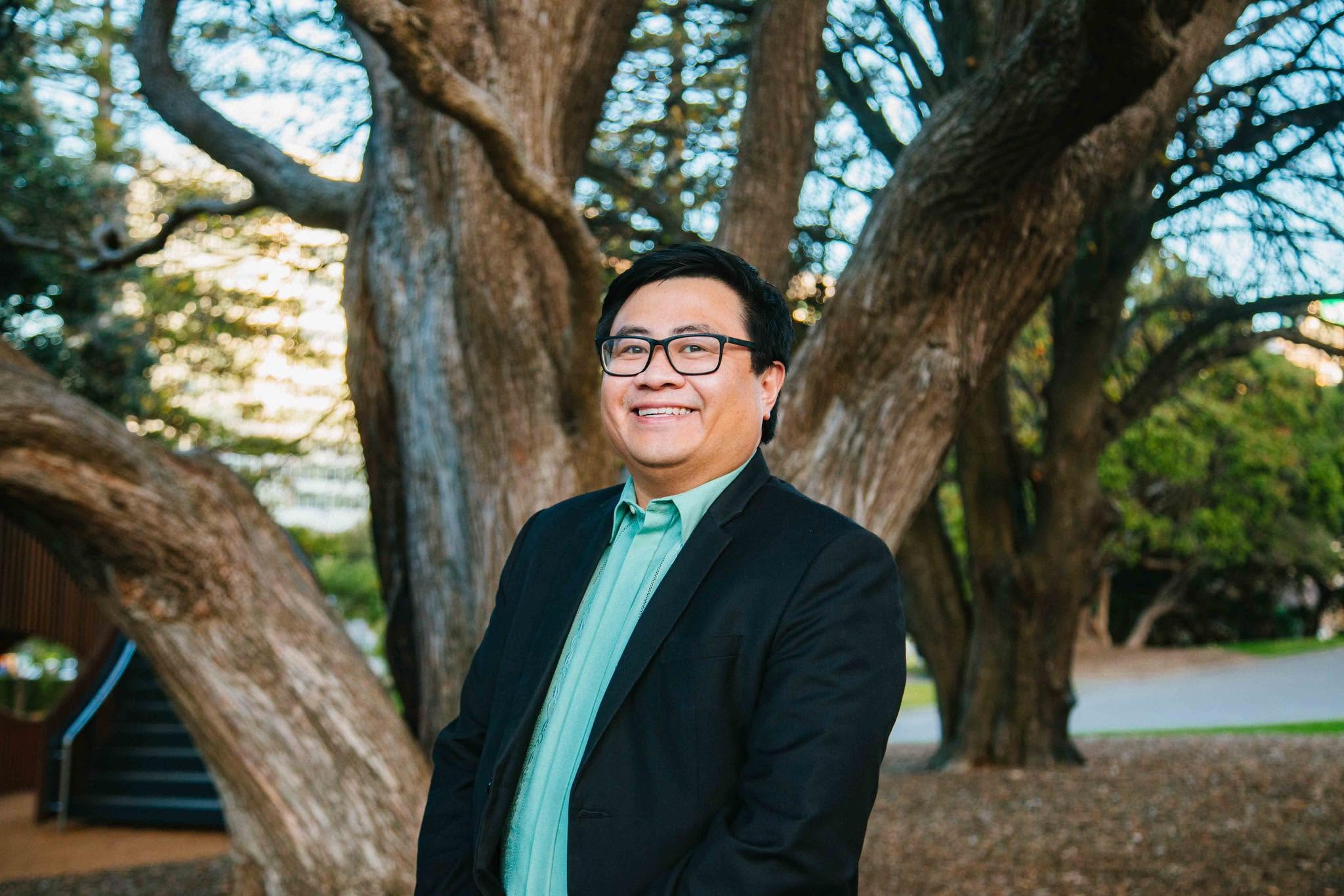
This interview was conducted on 20 October 2026, ahead of the 2026 general election.
The man, the myth, the Francisco
Molly Smith-Soppet:
So, just to start us off, can you introduce yourself and then tell us a bit about what brought you into politics in the first place?
Francisco Hernandez:
Kia ora, my name is Francisco Bagkus Hernandez. What brought me into politics? It’s a lot of things, really.
I mean, you know, when I was young, my brother was born with a congenital heart disease when we first moved to New Zealand. New Zealand, like, gave us everything. So from there I kind of felt a debt that I had to repay to New Zealand.
But the more immediate catalyst was getting involved in volunteering and in student politics when I was a student, and kind of seeing the scale of the issues and problems that you need to deal with.
I mean, you can do a lot from the grassroots up, but there’s levers that are above you that need to be pressed to enable people to do good things.
So you know, when I was a student, I was involved in Saint Vincent de Paul, and we did things like prison visits and providing recycled food and stuff like that, Food Not Bombs as well. But from getting involved in that, [I] kind of realised the scale of that needed to shift up one level. So instead of just a group of volunteers providing recycled food, why not have OUSA do it?
And that was the origin of the free breakfast program that OUSA did, so if you’re serious about making change, it’s about doing it at a systematic level, while acknowledging that actually there’s a lot of good work that goes on from the grassroots up.
But it's the role of decision makers in wider politics to enable people to do good things essentially, and to do the good things themselves - because the state is ultimately an expression of all of us and our collective values and desires.
Molly Smith-Soppet:
You moved to Aotearoa from the Philippines when you were 12. So how has that experience shaped the way that you see New Zealand and what you think politics should be doing for people?
Francisco Hernandez:
Yeah, as I said, when I came here, my mum was pregnant with my brother, and I actually helped give birth to my brother. It was really gory, man. It was like, wow. It was super shocking. There’s so much blood in childbirth.
But because he was born with a congenital heart disease, and seeing the way that New Zealand took care of my brother gave me that real dedication of wanting to give back to New Zealand. Yeah, and that’s where that comes from, and also, like, seeing the difference in politics as well.
Like in New Zealand, the politicians here, even if you do kind of hate them, are more responsive to public feedback, and you know, the prime minister shops in the same place as people.
Yeah, it’s probably a slightly posher New World that he goes to in, like Botany or whatever, but there are still people in state housing going to the same New World as he does.
Whereas, like in the Philippines, the politicians kind of form their own almost segregated caste that’s detached from society. Whereas here politics is more like grassroots and more accessible to ordinary people.
Molly Smith-Soppet:
You went from student activism and climate campaigning to working in the public service, and then eventually into parliament. Was there kind of a particular moment that you remember realising you wanted to move from that advocating for change to being one of the people who can actually make the decisions that make change?
Francisco Hernandez:
When I was getting involved in OUSA and getting involved in student volunteering, it was like providing recycled food to students through Food Not Bombs, and then it was realising that actually, if OUSA does that, it's more sustainable.
So it’s not just relying on volunteers; you can actually have real funding, real staff, real resourcing behind stuff. So I guess when I first started uni, I just kind of made those connections.
From Student Politics to Parliament
Molly Smith-Soppet:
When you were OUSA president, you introduced the free breakfast and worked on a student bus discount as well. Looking back, what did that experience teach you about the kinds of practical changes that make the biggest difference to specifically students’ lives?
Francisco Hernandez:
Yeah, I think OUSA has a real opportunity to make immediate, real on-the-ground differences for people through our relationships with things like council, through our relationship with the regional council, but also through providing service provision directly.
Like free breakfast, you know, I was talking to… I randomly met an Otago student at a party, years after I graduated, and she was a single mum, and she said that the free breakfast program that we put in made a difference to her being able to go to uni or not.
It's just seeing stuff like that and actually realising that OUSA has a lot of legitimacy in the eyes of the city, and it’s about using that to be a connector for students and be a connector for services, but also providing services directly.
Molly Smith-Soppet:
What can you do now as an MP that you couldn’t do as an OUSA president, and what do you think Parliament still fails to understand about student life?
Francisco Hernandez:
That's a great question. That actually came up in a Reddit question recently. The Reddit thread was about [the fact that] we [had] just made an announcement about introducing paid placements for students, and someone asked me, “What was the difference from when you were OUSA president and now?”
And I think I actually had a lot more direct power when you’re OUSA president compared to when you’re just a backbench MP. Because when you’re in opposition, you can’t really do much. You can be loud, you can form policy, you can hold the government to account.
But in terms of implementability, I have a budget of, like, $120,000 a year, which also has to go towards paying my staff. Whereas when I was OUSA president, we had a budget of 3.5 million. Yeah, and I think OUSA’s budget now is something like 6 million or something.
So there’s actually a lot more you can do as OUSA president than you can as a backbench MP. But you do have the tool as a backbench MP, as an opposition MP, of being able to hold the government to account and also form policy, which will make a difference when we change government. For example, like paid placements and stuff like that.
Molly Smith-Soppet:
Throughout your political career, you’ve also been very vocal about tertiary education and the role of student associations. What do you think universities and student associations should be responsible for providing, and then where should the government step in?
Francisco Hernandez:
Ooh, that’s a really great question. I would like to see a lot more devolution in terms of services, and I would like to see OUSA and the University more integrated.
Like, I would love to see student unions and student associations being seen, and the university administrations being seen as university government rather than just a separate student council or a separate university council.
I think universities should be a lot more democratic and a lot more controlled by the students and staff who work at it. And then basically, the scope of service provision is basically like student healthcare, student housing, things like that. Yeah, I’d love to see a larger role in universities for student governance.
The Greens and the big political questions
Molly Smith-Soppet:
You’ve worked on climate policy both inside the public service and as an activist. How has that changed your understanding of what effective climate action can actually look like, and where do you think New Zealand is falling short?
Francisco Hernandez:
I think, I mean, we’ve fallen behind in all areas during this term of government, unfortunately. They’ve cancelled really great initiatives like the Carbon Neutral Government Programme.
They’ve cancelled things like emissions pricing, which doesn’t account for agricultural emissions, which doesn’t really make sense when agriculture is like half of our emissions. So just immediately, things like that will make a really big difference.
But I think the thing that will make a really big difference to climate politics is tying it to the cost of living crisis, and doing things that aren’t just right but popular. For example, you know, free or low-cost public transport is an example of that. Where we can marry climate politics with cost of living solutions.
Molly Smith-Soppet:
The Greens have often had to balance pushing for ambitious change with negotiating in a parliament where they don’t necessarily have the numbers. Where do you draw the line between compromise that achieves something useful and compromise that undermines what the Green Party actually stands for?
Francisco Hernandez:
Yeah, it’s always a tough tension, and it’s always such a subjective one, right? Because you know, one man’s traitor is another man’s pragmatist, right?
I mean, to my view, as long as it’s something that materially moves the position towards where it needs to go, and it’s also made clear that it’s just a starting point, not just the end, right?
So, you know, for example, the Greens are pushing for things like fees-free for all tertiary education as part of our manifesto and as part of our coalition platform. But you know, if we get, like, say 15% and suppose Labour got 30%, and then TOP made up the difference of five, obviously we’re just a player in a three- or four-party coalition, so we’ll have to get what we can get.
But you know, to my view, even restoring fees free for one year would be a big step towards that goal. As long as you’re progressing, I think that’s okay with me. Obviously, I’d prefer the whole cake, but it’s better to have one slice rather than none in my view.
Molly Smith-Soppet:
As someone with a fair amount of experience in the public service, you’ve been quite critical of cuts to government departments. What do you think New Zealanders lose when the public service is cut back, and how would you make the case for investing more in it?
Francisco Hernandez:
There’s been an artificial distinction between the back-line and the front line in this government, and I think while it’s been effective at scapegoating people, it’s not actually how the public service works.
For example, when you cut hospital administrators that work in the so-called “back-line”, and you don’t actually have tools to replace them, that just means that the frontline doctors and nurses end up having to spend more time looking at case notes and doing the case notes themselves rather than having someone in the so-called “back-line” do it.
I mean, it’s kind of a stretch to analogise it, but it’s like in World War Two, right? Like, even though the people who are building, who are working in the factories and making the ammunition and the tanks and stuff weren’t on the front line, they’re still part of the overall package. I think the public service is a little bit like that as well.
Dunedin, students and young people
Molly Smith-Soppet:
You’re standing for the Dunedin electorate after previously entering Parliament as a list MP. Why is representing Dunedin specifically important to you, and what do you think the city needs from its next MP?
Francisco Hernandez:
Yeah. Well, look, I mean, the city has given so much to me in terms of when I was a student president, and also being able to do all the stuff that I’ve been able to do, so I’d like to give back to the city.
And I think what the city needs is someone who’s a strong, unapologetic advocate for the tertiary sector. Someone who pushed for fees-free, someone who pushed for universal student allowance, someone who pushed for real investment in our tertiary sector. And I’ve been that person within the Green caucus.
I mean, you will have seen a few days ago how we came up with a billion-dollar boost to research and tertiary funding. That was me pushing that as a member of Parliament. So I’ve been effective at getting stuff like that across the line for the Greens, which shows that I will be an effective advocate for the city if I’m lucky enough to be the electorate MP.
Molly Smith-Soppet:
Dunedin’s university and the wider tertiary sector are a huge part of the city’s identity and economy. What do you think is at stake for Dunedin if universities and other tertiary institutions continue to face funding pressure?
Francisco Hernandez:
Yeah. Well, look, and let’s give it a name because quite often we name University of Otago, but we don’t name Otago Polytech. Yes, and Otago Polytech is really essential to the city and so is Otago University.
But the reality is the cuts have actually been way worse for Otago Polytech than they have been for Otago University. They've lost about 100 staff according to the union over the past three years, and that’s a real shame because vocational education gives a lot of second-chance learners a second opportunity to learn again.
It gives people apprenticeships and trades skills for the future, which are a lot less easy to automate compared to some of the more white-collar-based work, so they’re both really critical, both really essential, and they both deserve real investment.
What I’d love to see is more partnerships between the University and the Polytechnic. I think the university does a lot of great research, does a lot of great applied theory, but I feel like that is where the polytech could come in, in the applied research side of things, to turn a lot of the theory that the university does into real-world applicable things and train people in how to use those things.
Molly Smith-Soppet:
A lot of young people in New Zealand feel like they’re being asked to accept high living costs, uncertain job prospects, and the prospect of moving overseas if they want a better future. What do you say to a student who is seriously considering leaving New Zealand after graduation?
Francisco Hernandez:
Well, I mean, there was a great banner that VUWSA (Victoria University of Wellington Students’ Association) had at one of their protests last year. I think it said something like “sh*t pay, no jobs, why stay?” Yeah, that essentially sums it up, right? Like, why?
I don’t blame young people for wanting to move when the conditions are like this. But I do think this is an opportunity for young people to be able to actually exercise their political influence and change the country for the better.
You know, we’ve seen a commitment from the Greens and, to a lesser extent, Labour to invest back in our young people. To actually get the economy moving again, so that we can be a country that’s worth being proud of and worth staying in, and like having the jobs and economic opportunities that it doesn't currently.
With things like the Greens’ Youth Jobs Guarantee, fee-free, and things like boosting paid placements, this can be a country for young people and students again.
Molly Smith-Soppet:
If you could point to one tangible change that you would want students in Dunedin to see over the next three years, what would it be?
Francisco Hernandez:
I think the thing that would make the biggest difference for students over the next three years is a real boost in their income. Because students are really doing it tough. I’ve heard so many stories of people having to choose between heating and eating.
I don’t really care what that mechanism of getting them that income boost is, whether that's through a universal student allowance or whether that’s through the thing that I proposed and I have a member’s bill in my name, of giving students the winter energy payment.
However, the more we can make sure that students are being supported through their study and getting more income that they need, the better.
Climate and the future
Molly Smith-Soppet:
You’ve worked on climate policy at both the regional and national levels. How should New Zealand decide who pays for climate adaptation when some communities face increasingly expensive risks from flooding, erosion, and extreme weather?
Francisco Hernandez:
Yeah. Well, look. My view has always been that we should make the polluters pay, right? Like make the people who are actually responsible for the climate-changing emissions, which are affecting our weather, pay; that is essentially it.
This is why during the previous term of the government, they ring-fenced the CERF, the Climate Emergency Response Fund, which is going to pay for stuff like climate adaptation and flood protection. They’ve ring-fenced the ETS funding, which is again the polluter pays principle to pay for stuff like that. And I think that’s the right and appropriate model to use.
Molly Smith-Soppet:
Yeah, yeah, beautiful. Like
Francisco Hernandez:
Make the people responsible for the problem, and pay for it. Yeah, no,
Molly Smith-Soppet:
When a major emergency hits, the immediate focus is understandably on rescue, recovery, and rebuilding. How do we make sure that recovery also leaves communities better prepared for the next emergency, rather than simply rebuilding the same vulnerabilities?
Francisco Hernandez:
Yeah, that's a really insightful question, and I think you have to go back and add, you know, another R, which is resilience. Which is actually making sure that communities, in the first place, are invested in before the disasters happen.
You know, they’ve done a cost-benefit analysis of this, and basically every study that they’ve done shows that every dollar you invest in adaptation and resilience before the emergency occurs pays back between $5 to $25 in dividends.
Yeah. So it just really makes sense that you actually need to be more proactive in preparing the responses and preparing the defences before the emergencies strike in the first place, and I think that’s not just a matter of actually installing physical infrastructure.
That is part of the puzzle. Don’t get me wrong, but it’s making sure that we have an all-of-society response. That people are prepared to look after their neighbour, and they’ve been trained to do so. And that actually people don’t even know who their neighbours are in the first place.
So making sure that we have that all of society's response shifting from just responding directly to events to actually mitigating and adapting to the threats we face, and making sure that we just invest in a lot of these things.
Molly Smith-Soppet:
Climate policy often involves asking people to accept costs now for the benefits that might not be obvious for years. How do you make the case for long-term investment when people are already struggling with the cost of living?
Francisco Hernandez:
Yeah, I think it’s just about making the point that a lot of the investment in climate change is actually things that will reduce the cost of living, either immediately or in the future.
For example, things like shifting towards a more sustainable public transport system, that is something that will reduce people’s costs now. Even people who aren’t taking public transport will see the benefit in things like less congested roads, but also things like a broader program of decarbonisation.
That also means that the price of fuel won’t go up as much, because the demand will be lower. Yeah. So it’s just about things like that and tying them up together because quite often, these things are listed as counterpositional to each other when they’re actually complementary. Yeah,
In closing
Molly Smith-Soppet:
You’ve worked across many different sectors, you know, in terms of politics, public service, activism, and all that. What has been the biggest lesson that you have learned about how change actually happens in Aotearoa?
Francisco Hernandez:
I don’t know if it’s the most inspiring thing, but it’s the truthful thing. It’s more random than you think. Yeah.
Like sometimes you just need to be in the right place at the right time, and sometimes people's basis of decision-making is not super robust. Like if you’re just in a position to be able to either be like annoying or impactful enough that the government feels the need to pander to you - so you f**k off. Yeah, but sometimes you can actually make change that way.
Molly Smith-Soppet:
For sure,
Francisco Hernandez:
And I do think that is something that the student union movement can actually learn from, and maybe this is a bit of a hot take. It’s controversial, but…
You know, I mean, obviously I don’t condone the tactics that they used, but the anti-mandate movement was able to get a lot of wins in this term of parliament because they had a champion in New Zealand First. They went to the polls, and they had their say.
I think if students had their champion in this term of government, which is like the Green Party. If students went out and had their say and actually voted for the Greens, like I think you’ll see the next government have a really strong focus on student-related stuff. If the students mobilised and voted and demonstrated their power, their political power in the political process.
Because ultimately power comes from the votes in a democratic system. It doesn’t come from the barrel of a gun here. Not in New Zealand. Yeah, yeah.
And if politicians and decision makers see, because you can actually look at the polling booth data, like you can literally see the university polling booths and see that Labour got crushed this term because they abandoned fees-free.
And like the university polling booth shifted something like 90% Green, and that gives an incentive for the Labour Party in the future to actually be like, oh, maybe we shouldn’t have walked back on fees free. Maybe we should have actually campaigned on universal student allowance.
So I think this election is a great opportunity for students to demonstrate their political power in a really direct way as well. Because we’re doing a two-tick campaign for this seat.
So if people like, if students flip the seat, or even run it close, they’ll be like, oh, actually students do have political power. We didn’t realise that, but maybe now we actually need to respect them. Yeah, you know. No,
Molly Smith-Soppet:
What do you think is the single biggest issue facing young people in New Zealand right now, and what would you like to see done about it?
Francisco Hernandez:
I think the single biggest issue is the cost of living crisis. We’ve come out with all sorts of solutions around that, from the youth jobs guarantee to paid placements, to supporting students through a universal student allowance.
But ultimately, the main thing that we can do about it as young people right now is to organise, which yes involves voting, but it also means getting involved in your local groups and pushing for change at a collective level.
Because, as Chlöe is fond of saying, not a single person can build a hospital by themselves - unless they’re a billionaire or something. I’m assuming the people who read your article won’t be billionaires, like, no.
Molly Smith-Soppet:
We can only wish.
Francisco Hernandez:
We have to work together, and we have to collectively come together and decide to build an Aotearoa that works for all of us. Because only by doing that will that actually happen.