
Interview: Hon James Meager, Minister for Youth and National Party Candidate for Rangitata
Published 29 October 2026. Interview by Muhammad Huzaifa and Andrew Lin.
The views expressed in this piece are not representative of SPPANZ or taken to be those of SPPANZ. They are the author's own. SPPANZ is nonpartisan.
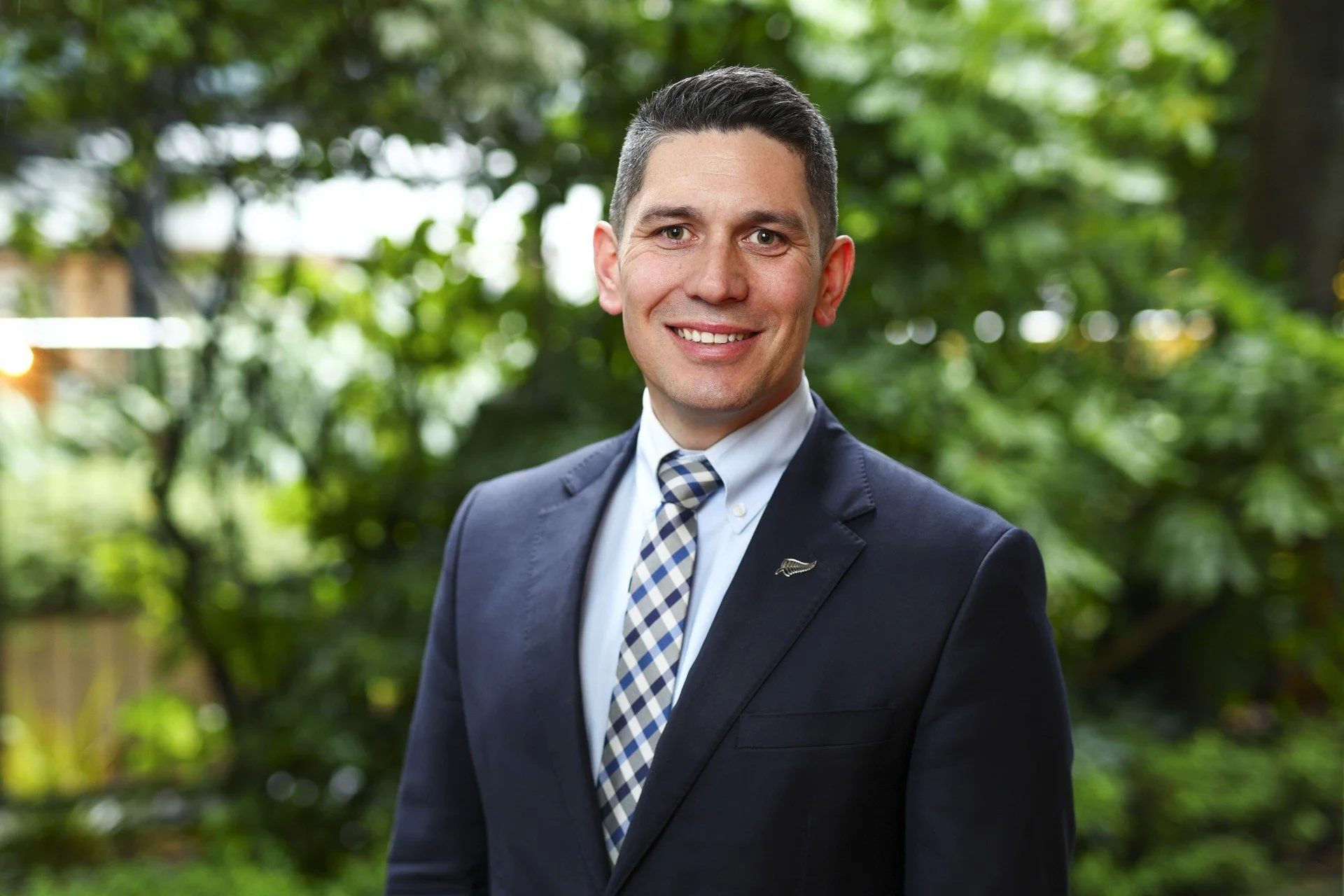
This interview was conducted on 12 October 2026, ahead of the 2026 general election.
Muhammad:
Thank you for joining us, Minister. To start with, could you tell us a little about yourself and the work you do?
James:
I'm James Meager, the Member of Parliament for Rangitata. My electorate covers all of Mid Canterbury, from the Rakaia River in the north down to Timaru in the south.
I was born and raised in Timaru. That's where I live, and that's where I flew into this morning.
As well as being the local MP, I was very fortunate to become a minister this term. I'm the Minister for Youth, Minister for the South Island, Minister for Hunting and Fishing, and Associate Minister of Transport.
Before that, I chaired the Justice Committee for about 12 to 14 months.
Muhammad:
I heard chairing the Justice Committee was a tumultuous time, with the Treaty Principles Bill being the first thing you had to deal with.
James:
It was like a roller coaster. There were ups and downs, but everyone enjoyed the ride, I'm sure.
Select Committees and Submissions
Andrew:
That ties in well with my first question. What should young people understand about how select committees and submissions work, and how much do submissions end up shaping outcomes?
James:
Select committees are there for two reasons. The first is scrutiny of the executive. We review government departments and their budgets, which is an important way of holding the government of the day to account.
The second, which is probably what most people think of, is scrutinising legislation. Most bills that come through Parliament are government bills, and they generally go to select committee to be put into shape.
No legislation is perfect. Sometimes a bill goes through without change, but often it needs improving. The committee's job is to suggest improvements and identify fish hooks or unintended consequences.
That's where the public plays a really important role. People with expertise come in with a view on whether the bill is right or wrong and how it could be better. Even if they don't agree with the bill, I think it's important that they offer improvements.
Submissions can have a substantial impact, depending on the bill. Every bill sits within the government's policy mandate, so a committee will never overturn its general direction. But you can get some significant changes.
A good example came into force just last week. The new lifejacket rule requires everyone to wear a lifejacket on boats under 6 metres. The original bill only applied to children — I think under 14 or under 16.
Submitters asked, "Why not expand it to all New Zealanders and make it consistent across the country?" It was a bit higgledy-piggledy, with different rules in the Bay of Plenty and in Otago.
Expanding it fell outside the scope of the original bill, so the committee wrote to the Business Committee [which organises Parliament's business] asking for permission, and Parliament agreed. We now have a rule covering all New Zealanders, and that only happened because of high-quality public submissions.
Youth Unemployment
Muhammad:
Youth unemployment has been rising over the past year, and it's something my peers and I are feeling.
How much of that do you put down to work readiness, and how much to the economy not creating enough entry-level jobs? Beyond waiting for an economic upturn, what is the plan to bring it down?
James:
No one likes to see unemployment rising, particularly for young people. I think it's a combination of both factors.
The first is how ready young people are to enter the workforce. It's that old chestnut: you can't get a job without experience, and you can't get experience without a job. The second is the economy. When it isn't as strong as we'd like, fewer jobs are created.
On skills, the compulsory education system needs to give every young person the chance to leave school with the knowledge, skills and qualifications to be valuable members of the workforce. That's one of its core jobs.
Results have declined significantly over the last 12 to 15 years. Erica Stanford [the Minister of Education] has led a massive turnaround job in our schools. We'll probably see the benefits in five to 10 years, when young people come through better qualified and able to read, write and communicate well.
For those leaving school now, we've tried to refocus the system on vocational training and trades, so young people match the jobs that exist right now.
A lot of people think the holy grail is going to university and doing what I did — a BA and an LLB — and falling into a job. You're probably the same. Probably everyone in this interview series is.
But there are a lot of highly skilled, well-paid jobs in the trades, manufacturing and the extractive sectors. If we lifted the status of vocational education, many more young people could be in work and earning straight away.
I always tell school leavers to figure out what success means for them and pursue that. For some, that's university. For others, it's an apprenticeship, work experience or starting a business.
There are also specific initiatives, like doubling the number of Trades Academies [which let secondary students train in a trade alongside school] and increasing Youth Guarantee places [fees-free tertiary places for 16 to 19-year-olds without school qualifications]. Those help young people who leave school without a qualification bridge that gap.
Jobseeker Support Changes
Muhammad:
One policy National has championed over the past year, coming into effect in November, is the change to Jobseeker Support. Most 18- and 19-year-olds applying will have to pass a parental assistance test.
As Youth Minister, how does that change the playing field? And if part of the problem is a shortage of entry-level jobs, how does restricting income support create a pathway into work?
James:
Our view is that the first port of call for support should always be you, your family and your local community. We think that leads to better outcomes, and it gives everyone more capacity to look out for their neighbours.
Some people, through no fault of their own, will always need extra support. But if you're 18 or 19, living at home, and your parents can afford to support you, our view is that they should. Where a household can't, there are income thresholds, and Jobseeker Support will still be available.
We think that does two things. It gives families an incentive to say, "It's time to make a plan, get you ready for work, and start looking." It also puts some tension in the system. We can't accept young people not doing their best to find work.
There are always trade-offs, but we think it sends the right message. If you want to get ahead in life, the best way is through work.
There's also a fairness question. Is it fair for taxpayers to fund the benefit for an 18-year-old living at home in Auckland with parents who are lawyers and doctors?
My dad's retired and my mum works at a supermarket, so they're low to middle income. Is it fair that they pay for the children of lawyers and doctors to receive the benefit? We don't think so, and we think there are better ways to go about it.
Muhammad:
Could you expand on those better ways? If the core issue is that young people can't find jobs to begin with, what would actually solve it?
James:
There are two parts. The first is better support within the Jobseeker system. That means more investment in case managers and job coaching, which is part of our plan now.
It also means expanding obligations, like volunteering or CV workshops, and resourcing driver licensing or heavy vehicle licensing. Those can be real barriers to getting into work, and you can address them while people are on the benefit.
The second is building an economy that creates real, sustainable, high-quality jobs. That starts with the right fiscal settings.
The Pre-election Economic and Fiscal Update [Treasury's forecasts, published before each election] came out a couple of weeks ago. It forecasts 220,000 new jobs over the next three years. That depends on the underlying conditions — how much debt we have, what we borrow, our tax rates, and whether businesses can afford to invest in young people.
Then there are programmes that connect young people with jobs and keep them off Jobseeker in the first place. That's where Trades Academies, Youth Guarantee and reforms to NCEA come in.
Measuring Youth Programme Outcomes
Muhammad:
As Youth Minister, you direct youth funding towards programmes that show real outcomes. In the 2026/27 performance measures, young people are tracked for up to a year, but employment results are still self-reported. The measure is whether participants feel the programme improved their chances of getting a job.
Why not measure concrete outcomes — whether they found work, how many hours they work, what they earn, and whether they're still employed six to 12 months later?
James:
You're right, and that's what we're starting to do. I was as surprised as you when I came into this role and looked at some of the contracts. They read more like outputs than outcomes.
Some organisations were measured on engagement, or how many young people they had worked with. They weren't measured on whether those young people went on to attend school more, get a job, or stay employed for six months.
As we rewrite contracts, we're asking providers to be clear on the outcomes they'll deliver. We've focused on three: improving school attendance and achievement, reducing the number of young people on Jobseeker, and the first 2,000 days of a baby's life.
The difficulty, which I've battled with alongside officials, is that our system is very privacy conscious. If you run an NGO delivering an education-to-employment programme, you can't access information about your young people two, three or four years later.
You can run a survey where people say they feel more ready for work. But you can't track whether the programme actually worked.
The government holds a lot of that data — income tax, unemployment, benefit and health data. I think we could do a better job of matching it with providers. Most New Zealanders would expect these organisations to know whether their programme worked a few years down the track.
If we're even a little more open with that information, we can find the programmes that deliver strong results and invest more in them. That improves young people's wellbeing and saves taxpayers money in the long run, because it keeps them out of unemployment, the criminal justice system and poor health.
That's very much a work-on for us and our officials over the next three years.
Government as an Employer and Graduate Programmes
Andrew:
The government employs a lot of young people, particularly through graduate programmes. What role should government play in graduate programmes going forward, and what advice would you give graduates who want to work in government or policy right now?
James:
We're a centre-right party, and we believe first and foremost that governments don't create jobs. The vast majority of hiring is done by the businesses and people who take risks and build an enterprise. Our focus is creating the conditions for employers to take on graduates with confidence.
Part of that is a good education system, so employers know a qualification is bulletproof and the people coming through are tip top.
The second part is helping employers take on graduates they otherwise might not. One example is Flexi-wage [a government wage subsidy for employers who hire people needing extra support]. A local building company can apply for a subsidy to take on a new apprentice.
That matters because for the first 12 to 18 months, an apprentice is limited in how much value they add. Most businesses carry them as a cost. And once they're trained up, they might move to another employer, and the business makes the investment without the return.
The third part is government as an employer, particularly in health. Medicine is a licensed, controlled profession. You can't spend six years at medical school and go straight into a clinic as a GP.
You have to do postgraduate placements and residency, and then join the professional colleges [the bodies that train and certify specialist doctors]. Government provides those placements in the public health system for medicine, nursing and other professions.
The question is how many places you can guarantee. Each one needs supervision from senior professionals, which takes time away from treating patients. There's a balance to strike.
National Civic Service
Andrew:
There have been past proposals for a voluntary national civic service, similar to the Student Volunteer Army or Outward Bound. Do you think a programme like that would work in New Zealand?
James:
I think there's real merit in it. I've engaged a lot with the Student Volunteer Army and its head, Sam Johnson. When the floods hit Nelson last year, we gave them a $50,000 grant to get students and young people out helping farmers through that tough time. It's an incredibly valuable organisation.
Outward Bound is more of a strength and leadership programme than a voluntary one, but it works in a similar community space. There's also the Duke of Edinburgh Award.
It's worth exploring whether a national award or system could recognise what these organisations contribute and the value of volunteering.
That's always traded off against competing priorities like health, education, law and order, and infrastructure. But if you could produce a cohort of young people across the country with life skills, communication skills and volunteering experience, that might be an investment worth making.
If anyone brings a proposal like that, I think the government would be willing to consider how to support it.
A Future Generations Commissioner
Andrew:
The government is making civics education part of the updated curriculum. In Wales, the Well-being of Future Generations (Wales) Act 2015 created a Future Generations Commissioner [an independent office that pushes Welsh public bodies to consider the long-term impact of their decisions].
Do you think something like that is needed in New Zealand to give young people a stronger voice in policy?
James:
It's an idea that gets floated from time to time, and the UK has used models like the Welsh one. It has pitfalls. I've read examples recently of a future-focused commissioner who shut down infrastructure projects because they didn't think those were projects we'd need in 30 years' time.
I think our system already engages young people pretty effectively. As you mentioned, civics is being taught from primary through to secondary school for the first time. The reformed NCEA will include a civics and participation subject.
There's also my role as Minister for Youth, which is an advocacy role. I engage with other departments and ministers about how their policies affect young people.
The barriers to participation for young people in New Zealand are incredibly low. I'm not sure we need another department or commissioner. It may be more about reaching political consensus on the important issues, which we're increasingly seeing in infrastructure.
Of course, everyone loves consensus when it's about their own ideas and not the other side's. But there's a growing appetite for it.
Enrolling to vote is a really low bar, and it's the best way to have your say. Most community organisations I know are desperate to get young people involved.
The question is what older people like me do to bring young people into those organisations. And how do we get them thinking about more than where the skate park goes or what student bus fares should cost?
Young people have a real stake in the big issues: debt, tax rates, future job opportunities and superannuation. What are we going to do about super in 40 years' time?
We should engage young people seriously on those topics. We shouldn't pigeonhole them with, "You're young, tell us what colour to paint the bus stop," and leave the important issues to the grown-ups.
The Minister for Youth Role
Andrew:
You described the Minister for Youth as an advocate. Does the role have enough funding and institutional power to meet the expectations placed on it?
James:
I think so, because it's fundamentally an advocacy role. You represent everyone aged 12 to 24, and the issues they face run across the board — unemployment, homelessness, mental health and education.
The levers to address those issues sit in a range of government departments. My job is to look across all of them, work out the priorities for young people, and influence where I can.
A single department reaching into health and education to pull levers wouldn't work as well, because those departments all have competing priorities.
You don't need a big budget or a large department to influence other ministers, particularly in a Cabinet system. With the resources we do have, we target them as specifically as possible at the outcomes we care about, like education and unemployment.
Policy Changed Through Advocacy
Muhammad:
Can you give us an example of a policy that changed because you pushed your colleagues to better reflect young people's interests?
James:
One example is a $3 million fund called the Youth Development Partnership Innovation Fund, which is a bit of a mouthful.
Because we're in a fiscally constrained environment, I told officials we'd only distribute it on a co-funding model. Organisations that want to access it need to bring matched funding from the private or NGO sector.
That stretches $3 million to $6 million. It also lets us fund organisations over two or three years, which gives them more certainty than a one-off grant.
It has changed the thinking. The agency [the Ministry of Youth Development] now actively seeks co-funders. One organisation in Christchurch received about $750,000 from the fund, and that was matched to make $1.5 million.
In theory, that means we can deliver twice as many outcomes. I'm quite proud we made that change.
Muhammad:
Would requiring matched funding disadvantage communities that don't have that kind of money? Could they still access government funding without well-resourced youth services?
James:
There's a range of other funding available, which reflects your point that not every community has businesses or philanthropists to call on.
But the smaller the community, the less resource a programme needs. In a small rural community in my electorate, $50,000 of government funding matched by $50,000 from four or five local businesses goes a long way. $100,000 for a community of 500 or 600 people, with maybe five or 10 young people who really need help, is quite a lot.
Smaller communities can find it harder to raise that money. But there are national funders like the One NZ Foundation, from the telecommunications company, which reaches right across the country.
There are also community trusts [regional trusts funded by the sale of the old trustee savings banks] and large corporates that like to contribute in the regions.
Still, I think communities should look first at what they can do for locals. Services delivered locally are a lot more effective than services delivered out of Wellington, and I think most people would agree with that.
How He Wants to Be Judged
Muhammad:
By the end of your time as Youth Minister, what is one measurable outcome you want young New Zealanders to judge you on?
James:
A marked improvement in young people's educational achievement and attendance. If we saw that by the end of this term, or after another three years if I'm lucky enough to keep the role, I'd be very proud.
It might not feel like a big difference after three years. But if you came back in five or 10 years and asked how the 24 and 25-year-olds are doing, I'd hope to say they're doing really well. They're successful, highly educated and ready for the workforce because of the work we did a decade earlier.
That's the whole social investment approach. If you invest now, you may not see the dividends in six months, 12 months or even three years. The benefits come 10 or 15 years down the track.
I'm comfortable if people say in three years that I haven't achieved what I wanted. In 15 years, I want to be able to say we fixed the fundamentals and invested in a long-term strategy for these young people.
Muhammad:
Thank you so much for your time, Minister. I hope this helps young people better understand your role, and shows that it's not all doom and gloom for the next few years.
James:
You're very welcome, and thanks to both of you and your organisation for the work you do. It's great to have young, enthusiastic people engaged in politics, and long may it last.