
Interview: Qiulae Wong, Leader of The Opportunity Party
Published 28 June 2026. Interview by Emily Attfield and Zinzan Goertzen.
The views expressed in this piece are not representative of SPPANZ or taken to be those of SPPANZ. They are the author's own. SPPANZ is nonpartisan.
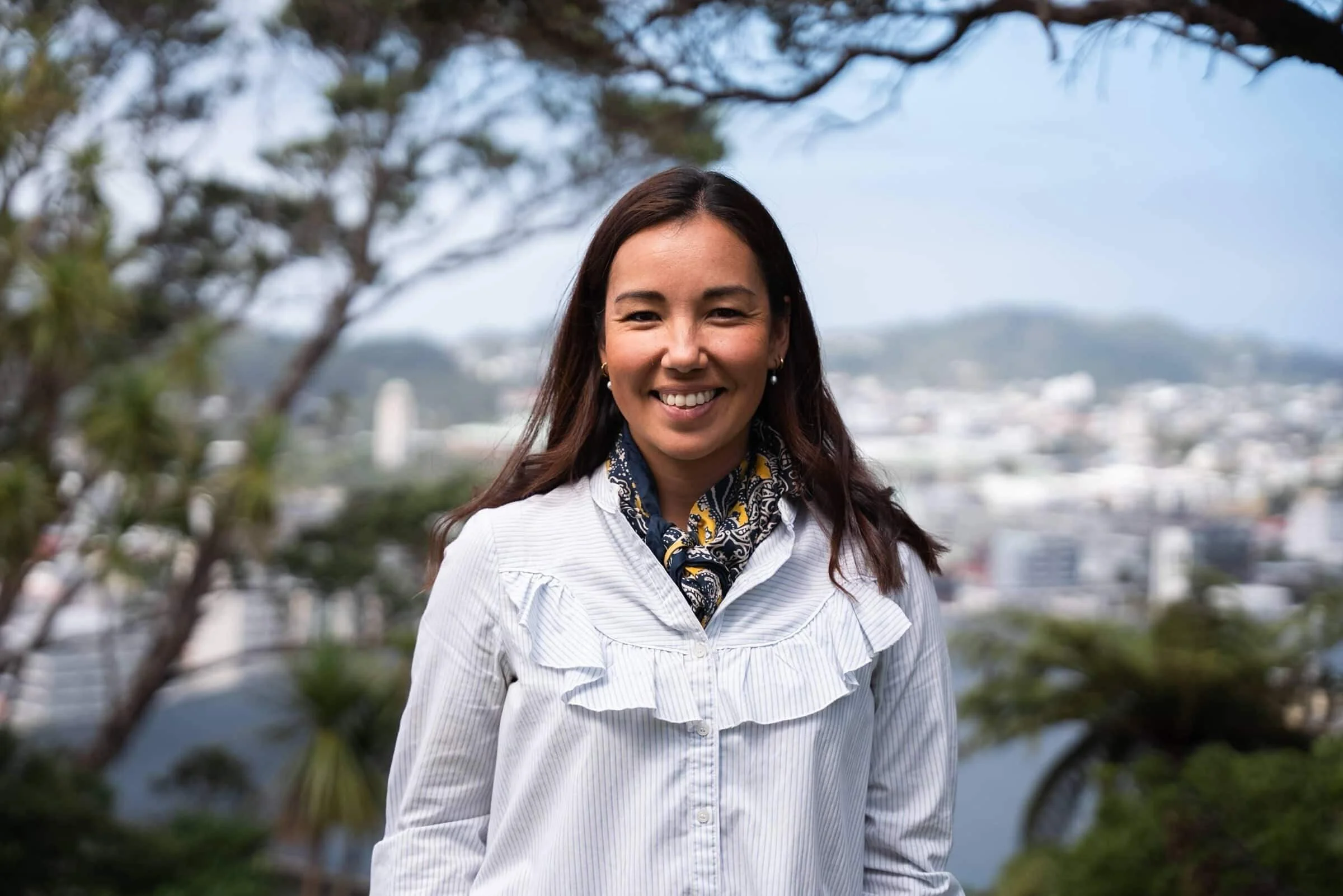
This interview was conducted on 19 May 2026.
Zinzan:
Let’s start by setting the scene. In 30 seconds, can you tell us who you are and the why behind what you’re doing?
Qiulae:
I’m Qiulae Wong. I’m the leader of The Opportunity Party. I’m a mum of two young girls who are five and two, and the reason I’m doing this is because I want a better future for them. I’m really sick and tired of politicians kicking big issues down the road.
From Sustainability to Politics
Emily:
Can you run us through a bit more about your background, what you were doing before politics, and what the turning point was for you when you realised, “I can’t just sit back and watch — I want to get involved”?
Qiulae:
I actually studied law and politics at university, so there was always a bit of interest there in how you make New Zealand a better place and what the systems are that do that. I ended up spending my career in the private sector, though, because I’d had an introduction early on to how you could use business as a force for good — trying to solve some of those social and environmental problems with the innovation, the ideas, and the fast-paced nature of business.
It was awesome. I had an amazing 15 years, including nine years in London, where I got to work with fashion designers and all kinds of different businesses to drive more sustainable practices. But I constantly came up against this need for structural change, and for legislation to make that the norm for all businesses. As long as it’s voluntary to have really high ethical standards, then it won’t be the norm. So we really need government intervention in some of those things.
The tipping point for me was working at KPMG. I was working with a bunch of big corporates on their climate reporting, and I saw a lot of really well-intentioned people. I went into corporate consulting being a bit sceptical of those big giant companies and how much they really wanted to change. What I learned was that they did want to, and they understood the long-term risks of climate on their businesses — but the system really incentivises short-term profit. That is what businesses are geared to deliver. Particularly in 2023, when we had this new government come in and really set a signal that maybe a low-emissions future is not what they were aiming for, that was the final straw that led me down the path of politics.
Emily:
Politics can be slow and compromise-heavy. Why did you go into politics when you could have gone down, say, activism or another career path to try and make similar changes?
Qiulae:
I have worked in that activist and advocacy space, from the business side. I was part of Kiwis in Climate, which is a group of climate and sustainability professionals working around the world — all New Zealanders. We wrote a lot of open letters and submissions and met with ministers to talk about climate action in New Zealand. I was also a trustee of the Wellbeing Economy Alliance, an organisation that has set out blueprints for how we can do things better — how we can make our economy work better for people and planet.
Ultimately, the leverage is just less when you’re working from the outside in those advocacy positions. It’s really hard to get the real leverage you need to drive change. In some ways, The Opportunity Party is playing a similar role because we’re outside of Parliament — we’re not in there yet — so we have the freedom to be a bit more vocal and push the boundaries a bit as a new party. That’s the perfect place for me. I can apply what I’ve learned in those advocacy roles, and as a new party we have the freedom and potential to actually drive some big change.
Leadership Style and Staying Grounded
Emily:
You’re still a relatively new face to many voters, especially coming into election year. How would you describe your leadership style, and what kind of political figure are you trying to become?
Qiulae:
Politics in New Zealand has become so divided and polarising. I feel like I’ve spent my whole career being a bridge builder and trying to find common ground. When you work in sustainability, that is the role you play — you have to advocate for a new way of doing business in a really old, traditional, conventional model. So I’m taking what I’ve learned doing that and trying to apply it to politics.
In terms of what that looks like for my leadership, I think it’s someone who is constantly trying to find common ground and not getting dragged into the really petty fights — I hope. It’s easy to say that. I know it’s harder to do, but that’s really what we’re trying to emulate as a party, and certainly for myself as a leader.
Emily:
There’s a lot of criticism, especially from young people, about politicians being out of touch — particularly with the younger generation and university students. How do you personally stay grounded with what everyday New Zealanders are dealing with and what’s important to them?
Qiulae:
I started in this role in November last year, and the first thing I did was a five-week roadshow tour around the country. It was extremely tiring, I have to say, but it also felt like a real privilege, because I got to visit all parts of this country and talk to so many different kinds of people from all walks of life and all different ages.
That’s the role of a politician. Sometimes it’s hard, because you’re constantly hearing the frustrations and challenges that people are facing. But I do really see that as a privilege — being able to piece together all of those challenges, find the common threads, see where you can drive leverage, and then represent their views at the national scale. So for me, it’s just about going out and speaking to as many different people as possible.
For young people in particular, we’ve been trying a lot harder this time to get out to the universities all across the country and have a really strong young Opportunity voice within the party. It’s tricky, because I wish I could stand up there and say, “I can make your life better tomorrow,” or even, “elect us and we’ll transform your life in the next three years.” But to be honest, the challenges that young people are facing are really big structural changes that we need to address as a country. So I hope the solutions we’re putting forward are those big, visionary things. We’re the party that is setting a vision for 2050 that we hope young people want to get behind. We’re not promising it’s all going to change overnight, but we are promising we’re going to actually start to turn the ship around — move New Zealand in a different direction that hopefully will mean more young people want to stay here and work towards that with us.
About The Opportunity Party
Emily:
For someone who doesn’t know much about The Opportunity Party — since you’re still a relatively new party and haven’t been in Parliament yet — how would you explain what the party is really about and what you’re trying to change in New Zealand politics?
Qiulae:
Since we were founded in 2017, The Opportunity Party has always been about trying to address those big structural shifts we need to make as a country. Tax is a great example of that. We think tax reform is well overdue in this country, and we really need to have a proper grown-up conversation about it. But it also extends to things like climate action — how do we change our economy so that it works better for people and planet. That’s what we’ve always been about as a party: not tinkering at the edges, not kicking these cans down the road, but actually having a grown-up conversation.
To do that, we really have to break this left-right gridlock. Some people describe us as a centrist party. We would love to do away with the whole left-right spectrum altogether, because I don’t think it accurately represents how people think about politics these days. We’re driven by evidence. We have to look at the context that we’re in as a country today in this world and figure out how to work together on some of these solutions to build a better future for New Zealand.
Emily:
What is it about The Opportunity Party that makes it stand out from the other parties currently in government? And if you were in Parliament, you’d likely be part of a wider coalition — is there anyone in particular you’d work with, or wouldn’t?
Qiulae:
We’ve said our preference would be to work with either of the major parties — so Labour or National. It’s really important that we hold that position and don’t pick a side. That’s kind of what’s happened with our MMP system: we’ve ended up with a left block and a right block. We may as well have first past the post — it’s like two major parties, essentially, again. The whole point of MMP is that you have diversity of thought and diverse parties that can work together in different ways.
I remember being at university under the John Key government, when they were working with the Greens and Te Pāti Māori. That just seems completely unrealistic today, which is really sad, because there were actually some really good programmes that a coalition like that brought to the table. Things like the Warmer Kiwi Homes programme was a National–Greens idea that they brought to reality together.
For us, we’re really open to working with either side. As a party that is about finding common ground, we will genuinely sit down around a table and try to build that coalition with anyone. If there’s any party we’d find it hardest to do that with, it’s New Zealand First. That’s not just because of policy differences — there are actually some policies we agree with them on, like tackling competition and breaking up the energy market to bring more competition there. But what’s difficult for us with New Zealand First is they have changed their mind so many times on their position on things that it’s hard to trust the integrity behind where they stand. In saying that, we’ll absolutely try to find common ground, but we’d rather work with the two major parties in some shape or form.
Reaching 5% and the Everyday Voter
Emily:
You haven’t quite cracked that 5% mark yet — you sort of hover on the 2 to 3%. What do you think has stopped The Opportunity Party from getting to 5%, and how are you focusing on that for this election cycle?
Qiulae:
It is a high bar for new parties to enter the MMP system. 5% is quite a tough nut to crack, and there’s a reason that no party has done it before without a former MP on the team. But we are looking to make history this year.
In the past, we’ve focused too much on the policy and hoped that would be enough to get us in. But the reality is we have to get out there and earn the trust of Kiwis. They need to get to know us as people. So I’m really excited that we’ve got over 40 candidates that we’re going to be standing around the country this election. It’s about them getting out into the community, translating what the party means for that local community, and really getting to know them — so those voters can see themselves in our policies and our ideas and want to be represented by us in Parliament. That takes a lot of hard work, but we are absolutely doing it, and I’m feeling pretty good about it.
Emily:
Some people see The Opportunity Party as primarily targeting students and professionals, but not necessarily the everyday working-class voter. Do you think that’s a fair criticism? Who are you trying to target as a party with your policies?
Qiulae:
It’s been hard for us to reach out beyond the core 2.5% that has supported us since the beginning, partly because of resourcing and capacity — how many people we have to get out into those communities.
When you look at our tax reset policy, which we’ve just announced, we estimate it would lift 50,000 people out of poverty immediately. It’ll be a tax cut for 70% of New Zealanders, so that’s mainly targeting low-income working New Zealanders. For another 20%, they would see no real change. And for 10% — those who are on high incomes and own a lot of property — they will see a tax increase.
These policies are directly targeted at alleviating the cost-of-living pressures for people, particularly on low incomes. That’s not just because we want to make their lives better, but also because it will make for a more cohesive New Zealand. A New Zealand where we have a huge wealth divide is not good for anyone. It’s not good for those people who can’t afford to live. It’s not good for businesses, which will have fewer consumers that can buy their products and services. It’s not good for cohesion and communities. We need to rethink these big settings for everyone in New Zealand.
We’ll be reaching out to as many of those different communities as we can to articulate how our vision can benefit them. Within the 40-plus candidates we’ve got, we’ve got a real diverse mix of people from different backgrounds. So I’m really confident that more than ever, we’ll be able to reach a broader cohort of people who will potentially vote for us.
Zinzan:
You’ve said you’re reaching out to the universities, and I saw a photo of you with the Victoria University of Wellington Politics Society president, Ben, on Instagram. You guys looked great. You’ve also often talked about the next generation in your rhetoric. But where does young people’s input really land at The Opportunity Party? Is it on the board? Is it in policy? Is it in candidate selection? Are they shaping the platform, or is it just being marketed to?
Qiulae:
We have a Young Opportunity cohort, which is led by Evan French, who is actually one of our candidates in Auckland. He’s standing in Glen Eden, but he’s also a youth representative — a youth candidate who’s working across multiple different electorates as well, tapping into that youth vote.
Evan is a great example of someone who contributes to policy, contributes to strategy and our messaging. We take his feedback that he’s hearing from students on the ground and feed that into our approach and our strategy. We’re a small team, so everyone like that has input and can make a really constructive difference to what we do.
We need to build out more young people as part of that team, because Evan can’t do it alone. We do have one other candidate in Rotorua who’s also 22 and recently finished university. We’d love to have even more representation within the party. There are a lot of young people volunteering, contributing their time and their skills, and we take their feedback really seriously.
The Long View — Selling Generational Change
Zinzan:
You recently told The Detail that The Opportunity Party is a startup and it can’t really do everything, and that your hardest push is a 25-year energy strategy. But a lot of young Kiwis are leaving to Australia now. How do you sell that 25-year plan to a 22-year-old who’s booking his flights to Melbourne and looking for a grad role over there?
Qiulae:
This goes to what I said earlier — I wish I could say we’re going to make that 22-year-old’s life better tomorrow, or even next year. But I think that is the trap a lot of politicians fall into: making big promises and not delivering. That constant repetition of promises that don’t get delivered is what is making people lose trust in our system.
So something like the energy strategy is about building a future that is way more prosperous for those young people. It might not be in the next couple of years, but in the long term, yes. And to be honest, I’d be hypocritical if I said, “Don’t go overseas.” I had an amazing time in London and I brought back so many great experiences. It made me a more open-minded person for it, so I fully encourage people to go and explore the world.
But I hope what they see in our policies and what we’re doing is that we have a clear vision for what we think New Zealand needs to do in the next 20 to 30 years. That’s going to make New Zealand a more affordable place to live, a more connected place where we have communities that support each other — the kind of New Zealand I hope all those people either want to contribute to and stay and help us build, or come back to once they’ve done their exploring. That’s really our pitch for young people.
Zinzan:
On the flip side, how do you convince the most prominent voters — who are typically older homeowners, who have to wear that short-term cost a lot of the time and may very well never see the upside?
Qiulae:
We do actually get a lot of older people coming to our events — grandparents with grandkids, quite a few grey hairs in the audience. They’re really voting and contributing to our movement on behalf of the next generation — their kids and their grandkids. I describe them as good ancestors — people who are really thinking about the legacy they want to leave behind.
We know that there is a huge wealth transfer due to happen with that generation, which has accumulated quite a bit of wealth and property and has done really well over the last 40 years. Many of those people are looking at: “Do I leave my kids this big inheritance, or maybe I should vote for a party like Opportunity now, which actually will make their lives better?” Maybe that means I’ll pay more tax in the short term. Maybe it means I won’t leave as much money in the bank or as many expensive properties to them when I die. But I know I’ll have contributed to a world where they can afford to buy a house, where they’ll have jobs that are more high-value and more interesting and innovative here in New Zealand. That’s what’s on the mind of those older people who are supporting our movement, and it’s really awesome to see we have both young and old as part of Opportunity.
Zinzan:
Following up on that — do you think The Opportunity Party would accept being a one-term party if it meant getting these long-term policies through?
Qiulae:
I don’t think it’s realistic for it to stick if that was the case. If we had the opportunity to just wave a magic wand and change legislation overnight without bringing other people on that journey, it would just become susceptible to reversal — in the same way that we’ve seen so much reversal of infrastructure projects, or the RMA that gets scrapped and rewritten and is basically the same.
It’s really important that we bring both the public and enough of the other parties along, so that the new direction can stick. Things like the tax reset policy are really big, and it’s not good for New Zealand if we’re flip-flopping on these things every three years. That’s what really slows us down and drives low productivity, low growth, and low aspirations. It’s actually stability and consistency that helps. So while it would be tempting if somebody put it on the table, I think we need to feel confident that the partnerships we’re entering into are long-term and going to stick.
Zinzan:
So The Opportunity Party’s longevity is just as important?
Qiulae:
Yes — the longevity of these things is key. It won’t make a difference if it’s only in there for three years and then gets removed.
Scrapping Fees-Free
Zinzan:
The government is scrapping fees-free. You may have seen a lot of students protesting, up in arms. The government argued it didn’t really achieve the policy goals of lifting enrolments and that it mostly benefited wealthier students. Do you back the scrap? And if so, what replaces it to actually reach fees-free’s main goal?
Qiulae:
We’ve said we don’t think scrapping it immediately like that was fair at all. I know the government said they’ve got data on whether it was impactful, but they didn’t even give it enough time to study whether it meant more low-income students were graduating and getting into jobs after university — it’s only been a couple of years. They don’t really have the data, and they haven’t looked into proper studies to see if it’s worked or not. Pulling the rug out from under students that quickly is really unfair, and that also leads to that lack of trust we were talking about earlier.
If we get into government in November, what we’d love to do instead is instate the citizen’s income. This is part of our tax reset policy. It replaces a lot of our welfare system and supports all adults — everyone over the age of 18 — with $370 a week. That’s about $19,000 a year for everyone, for every year of study, which we think would do so much more to reduce student debt and support more people to study, because they have that safety net to be able to not worry about whether they can pay rent or pay for groceries, but actually focus on studying for their future.
If we’re scrapping fees-free and looking for new solutions, then we’ve got some other great solutions that we think could actually drive great outcomes for young people.
Zinzan:
So ideally it would be that you get the citizen’s income and not fees-free as well — just one of them, just the citizen’s income?
Qiulae:
I think it would be one or the other, because the citizen’s income would be far more money in students’ pockets than the equivalent fees-free scheme would do.
Zinzan:
And it’s also money now, as opposed to money on the loan. Do you think it was more of an ideological decision by the government, then, as opposed to evidence-based?
Qiulae:
I think they’re just in a mindset of trying to cut costs, and we’ve got the budget coming up, so it’ll be interesting to see what’s in there. They’re in this mindset that if you just cut, cut, cut, that’s magically going to grow the economy. We know now that doesn’t work. We’ve seen governments overseas try to do that — have these sort of austerity measures.
Of course, we need efficiency. We want government to be spending our taxpayer money well so that we’re creating good outcomes. There’s nothing wrong with looking at that. But perhaps it was something that felt easy to shave a few million dollars off in order to make the books look good, without looking at the long-term impact of it on New Zealand.
A Closing Pitch to Young Voters
Emily:
A lot of students are wanting to look beyond the big parties — Labour and National — to get their vote this year. As your final pitch, especially to students, what do you see as the biggest issue facing young people, and what will The Opportunity Party do to address it?
Qiulae:
I’ll just repeat my vision message again. I think it’s the long term. I want young people who are looking at going to study, who have recently graduated from university, to imagine that New Zealand is going to be the place where the best and most exciting businesses are born in the future. Where we have businesses that are solving major social and environmental problems. Where we can attract investment to stay here. Where we’ve got the energy systems and the start-up ecosystem that can really thrive.
The Opportunity Party really represents that future for young people. If they want to see that future eventuate, then they have to join us on this movement. We’ve got to stop voting for the status quo. We need something new. We need to shake things up. Now is a moment in history where we need big, bold change — and that’s what The Opportunity Party is representing.